New Products
 Earth-Friendly Products
 Biotium Choice Antibodies
 Special Offers
 Quick Order Tool



Content #1
Content #1
Content #1
For many scientists, the traditional academic pathway of graduate school, postdoctoral training, and a faculty position has long been portrayed as the default measure of success. Yet for an increasing number of people in biological research, fulfilling and impactful scientific careers are taking shape beyond academia in industry roles that value technical expertise, problem-solving, communication, and collaboration.
In recognition of the International Day of Women and Girls in Science on February 11th, Biotium spoke with three women working in scientific roles outside the academic track: a Senior Research Associate, a PhD-trained scientist working in Technical Support and Technical Writing, and an Assistant Director of Bioscience in a leadership role. Their experiences reflect the varied landscape of scientific careers and highlight how industry environments can support growth, confidence, and long-term sustainability in science.
For Senior Research Associate Alesha Cox-Harris, the journey into science began early. Through the Green Scholars Program, she was exposed to multiple scientific disciplines and even had the opportunity to work with a NASA scientist studying cryotherapy and injury recovery. Like many students, however, her initial understanding of science was narrow.
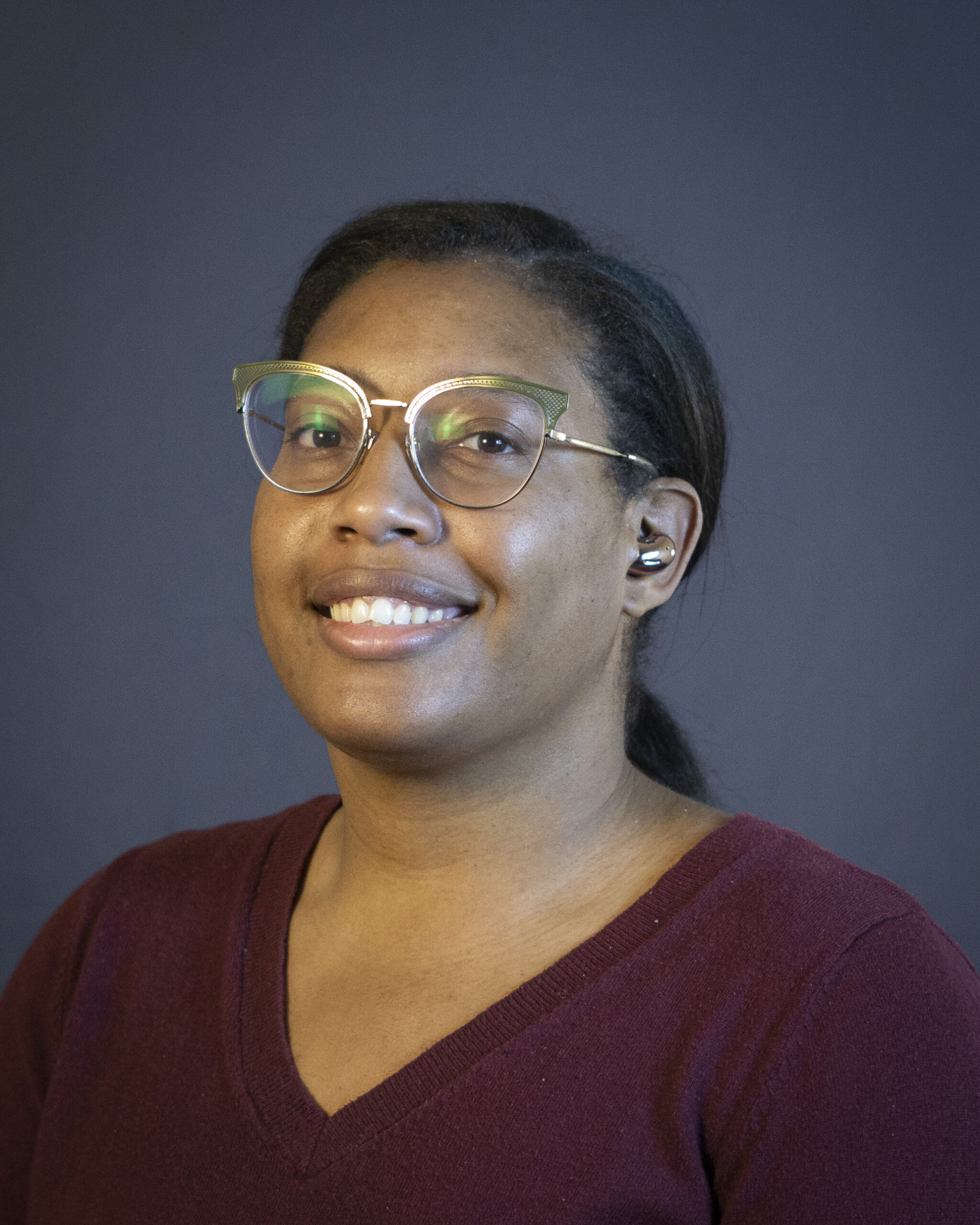
Alesha Cox-Harris, Senior Research Associate in Bioitum's Bioscience department.
“When I went into undergrad, I actually thought I would be pre-med,” she explained. “I always thought going into science meant you become a doctor.”
That perception changed when she began doing research as an undergraduate, working with C. elegans to study olfactory systems. The experience revealed a different side of science, one centered on discovery rather than clinical practice, and led her to pursue research assistant roles after graduation rather than immediately entering graduate school.
While working in an academic lab at Stanford studying how stress affects the immune system, Cox-Harris developed expertise in flow cytometry, a skill that would later become central to her transition into biotech. When she decided to leave academia, she evaluated a range of industry options, from large pharmaceutical companies to smaller research-focused organizations, ultimately choosing Biotium for its ability to leverage her existing skills while offering a more balanced work environment.
For Marissa Glover, a PhD-trained research scientist working at Biotium as a Support Scientist/Technical Writer, the departure from the traditional academic trajectory began during graduate school. Although she entered her PhD program with a strong passion for genetics and molecular biology, she was already thinking critically about long-term career fit.

Marissa Glover, Support Scientist/Technical Writer at Biotium.
“I knew I wanted to work in industry rather than academia,” she said, noting that while she enjoyed experimental design and independent research, she eventually felt ready to broaden her impact beyond her own bench work. Rather than viewing her PhD as a narrow training in bench techniques, Glover came to see it as preparation for a much wider range of scientific contributions, an insight that ultimately led her to a role supporting researchers across many projects rather than managing projects herself.
Across all three conversations, the value of scientific skills that translate across roles and settings emerged as a consistent theme. For Cox-Harris, flow cytometry provided a bridge between academia and biotech. For Glover, the cumulative skills of critical thinking, troubleshooting, and scientific communication developed during her PhD proved essential in her current role.
“Graduate school forced me to develop independence and confidence,” Glover reflected. “Those skills now show up every day in how I approach problem-solving and communication.”
Alexis Madrid, Assistant Director of Bioscience, joined Biotium in 2014 after completing a postdoctoral fellowship. From a leadership perspective, she emphasized how industry roles can offer continuous learning beyond the bench. Despite having extensive academic lab experience, she described her transition into industry as an opportunity to grow in entirely new directions.
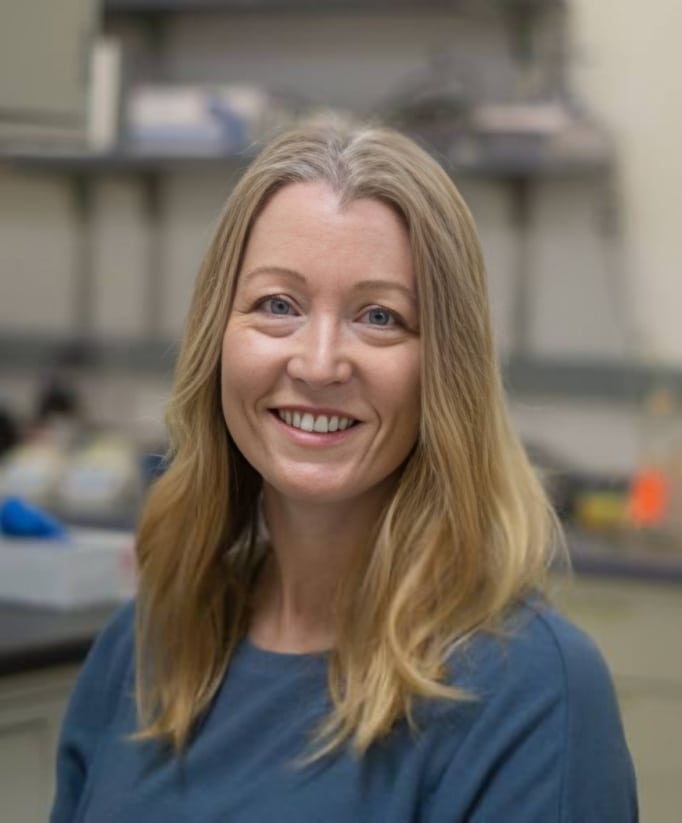
Assistant Director of Bioscience, Alexis Madrid, PhD.
“Biotium was my first industry job after my postdoc,” she explained. “I’ve learned a ton about so many aspects of the biotech industry from product development, business partnerships, even marketing and web design.”
What has kept her engaged, she noted, is the work's dynamic nature. With projects spanning multiple application areas, there is constant opportunity to learn, contribute, and avoid stagnation.
At Biotium, all three women described an environment that supports learning without the chronic stress often associated with academic research. Cox-Harris noted that expectations are well managed, pressure is largely self-imposed, and work-life balance is achievable.
“I feel like it’s a very manageable environment,” she said. “It doesn’t lead to a lot of anxiety or stress.”
This balance has played a significant role in her growth as a scientist. She described Biotium as a “safe space” where she can build confidence, learn new techniques, and improve through experimentation without fear of failure. This experience was echoed by Glover, who emphasized the value of applying scientific training in new and evolving ways.
For scientists working outside traditional research roles, impact often looks different but is no less meaningful. In her role as a Support Scientist/Technical Writer, Glover finds fulfillment in helping other researchers succeed.
“When I help someone troubleshoot an experiment or choose the right product, I’m contributing to many research projects rather than just one,” she said. “That kind of impact feels incredibly meaningful.”
Madrid echoed this broader view of contribution, emphasizing that leadership, mentorship, and product development are all integral to advancing science. She highlighted her pride in the work her team has accomplished over the past several years, including the development of multiple new products in a short time frame.
“My associate Alesha and I have worked hard on them,” she said. “We are both moms, and I’m proud that we’re able to accomplish so much while still being there for our kids when they need us.”
In academic culture, scientific value has often been closely tied to time spent at the bench running experiments and generating data, with the main goal of publishing in academic journals. As a result, stepping away from this particular type of research can be framed, implicitly or explicitly, as a loss. Instead, these experiences illustrate how science advances through many interconnected roles and that industry settings can offer scientists space to define success on their own terms.
When asked what advice they would offer to aspiring scientists, all three interviewees emphasized awareness, confidence, and flexibility. Madrid noted that she wished she had better understood the range of scientific career options earlier in her training.
“I knew about the path to becoming a professor,” she said, “but much less about industry jobs or other careers that make use of a science degree, and how best to pursue them.”
She also stressed the importance of visible role models at all levels, especially in leadership, so that women can see clear paths for advancement. At the organizational level, she emphasized that flexibility and work-life balance are essential for retaining women in STEM, particularly given the unequal distribution of family responsibilities.
Reflecting on her own experiences, she acknowledged that gender bias is often subtle but real, citing moments when her ideas were attributed to male colleagues or when career advice was shaped by assumptions about motherhood.
Glover urged PhD scientists considering non-laboratory careers to speak directly with people already in those roles, noting that informal conversations often provide more clarity than job descriptions or online research.
For girls and young women who may question whether they belong in science, Cox-Harris offered a simple but powerful message: try anyway.
“Walk through that door,” she said. “You’ll never know where you fit in if you don’t even try.”
The experiences shared by Madrid, Cox-Harris, and Glover reflect a broader shift in how scientific careers are defined and supported. This shift reflects a well-documented change in the scientific workforce. Only a small fraction of life science PhDs ultimately hold tenure-track academic positions, while industry employs a growing share of scientifically trained professionals.1
At Biotium, women are building careers that draw on rigorous scientific training while embracing flexibility, collaboration, and growth beyond the traditional academic mold. As the scientific community continues to evolve, recognizing and valuing these diverse pathways is essential, not only for retaining talented scientists but for advancing research itself.
On this International Day of Women and Girls in Science, their stories serve as a reminder that there are many ways to pursue an impactful career in science and that meaningful research opportunities exist well beyond the academic bench.
References
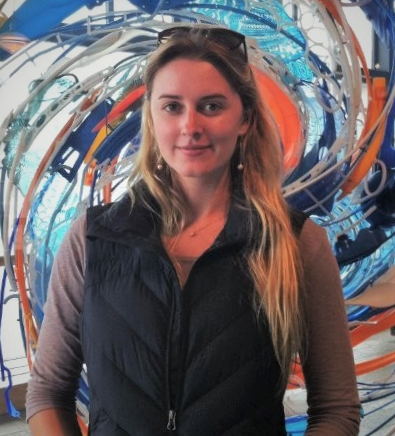
Julianne Davis earned an MSc in Behavioral Neuroscience from the University of Washington, Seattle, where she examined the role of memory in cost-based decision-making. She has also studied sensory integration at the Allen Institute and the neural basis of feeding, thirst, and metabolism at the University of California, San Francisco as a research scientist. Currently, she is a Technical Writer and Support Scientist at Biotium.