New Products
 Earth-Friendly Products
 Biotium Choice Antibodies
 Special Offers
 Quick Order Tool

 Powered by Bioz


Content #1
Content #1
Content #1
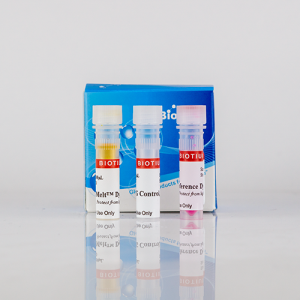
Kit for fluorescence-based measurement of protein unfolding or thermal stability in thermal shift assay, also called Protein Thermal Shift™, differential scanning fluorimetry, or Thermofluor assay.
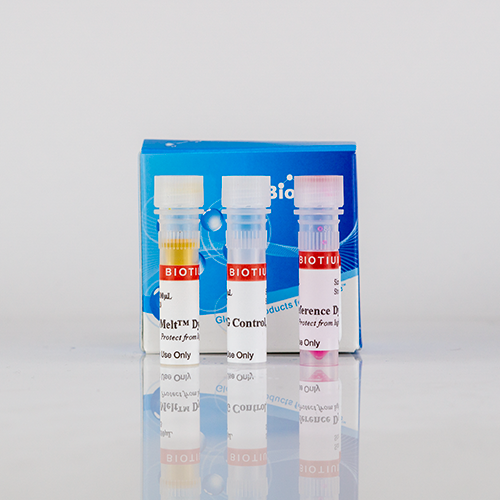
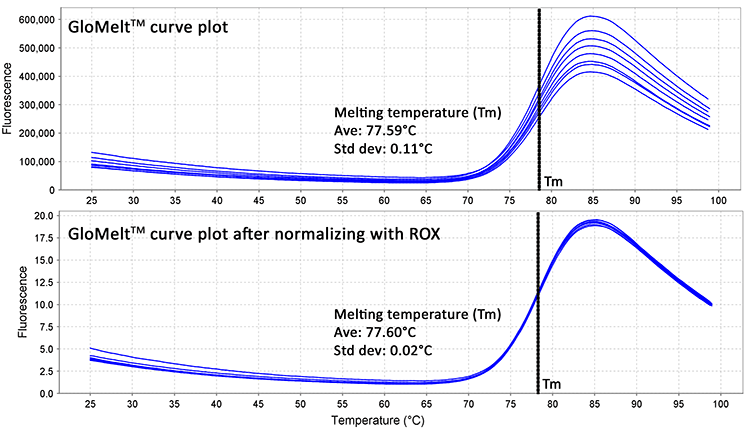

The GloMelt™ Thermal Shift Protein Stability Kit is used to detect protein unfolding or measure thermal stability by performing a thermal shift assay, also called Protein Thermal Shift™, differential scanning fluorimetry, or Thermofluor assay.
Also view our GloMelt™ 2.0 Thermal Shift Protein Stability Kit which features a Recombinant Monoclonal Mouse IgG1 for performing control reactions. Compared to the polyclonal goat IgG control provided in the original GloMelt™ kit, the recombinant mouse antibody included in the GloMelt™ 2.0 Kit generates higher signal and a sharper melt peak between for robust assay validation.
Please Note: We do not recommend the Glo-Melt™ Thermal Shift Protein Stability Kit to study membrane proteins due to the exposed hydrophobic groups and the nature of the detergents typically used in their extraction and purification. To determine if the kit is compatible with the additives and components of your buffer, please consult the table in the product information sheet.
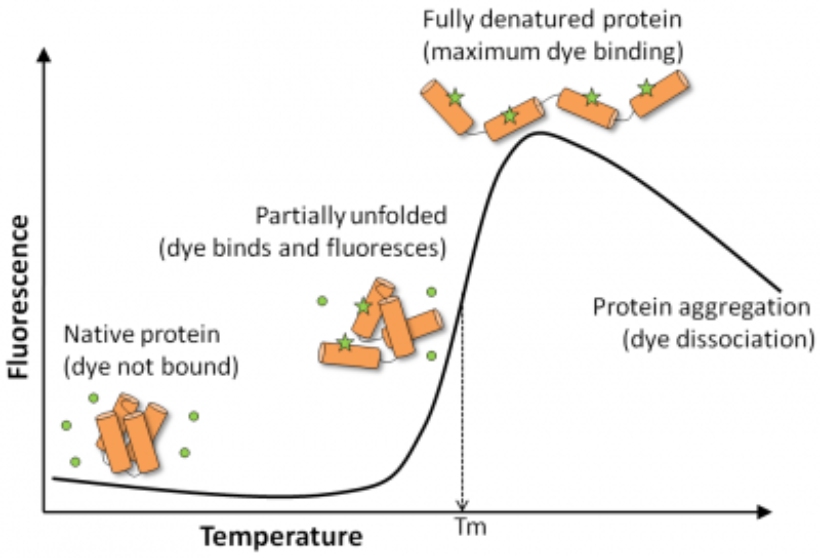
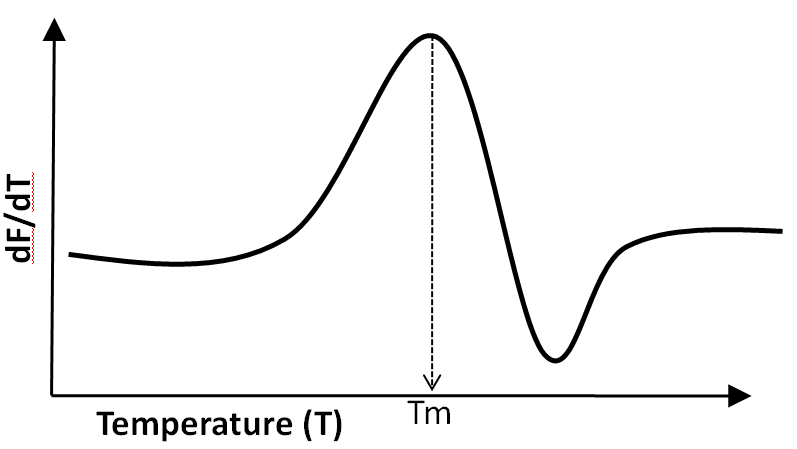
Environmentally sensitive fluorescent dyes can be used to monitor the temperature dependent unfolding of a protein. The protein’s melting temperature (Tm) is a reporter of the protein’s thermal stability.
GloMelt™ dye undergoes fluorescence enhancement upon binding to hydrophobic regions of denatured proteins, and therefore can be used to detect protein unfolding or measure thermal stability by performing a thermal shift assay, also called Protein Thermal Shift™, differential scanning fluorimetry, or Thermofluor assay.
The thermal shift assay is a rapid and inexpensive technique that quantifies change in protein denaturation temperature, and thus can be used to screen conditions that affect protein thermal stability, such as protein mutations, ligand binding, and buffer formulations (like pH, salts, detergents, and other additives). These assays are rapid (typically about 30 minutes) and are performed on a quantitative PCR system. The thermal shift method is compatible with high throughput screening and requires much less protein than methods such as circular dichroism and differential scanning calorimetry.
To learn more about GloMelt™ and see how it compares to competitor products, visit our GloMelt™ Technology Page.
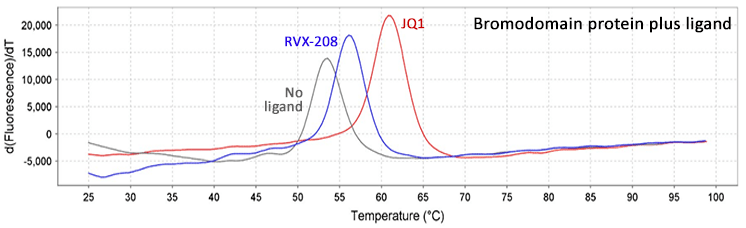
Small molecule inhibitors of bromodomain proteins have shown therapeutic effects in cancer models. Here, a GloMelt™ thermal shift assay was performed on 10 ug bromodomain BRD2 in the presence of bromodomain inhibitors JQ1 or RVX-208. Inhibitor binding stabilized the protein as indicated by the shift of the melting curves.
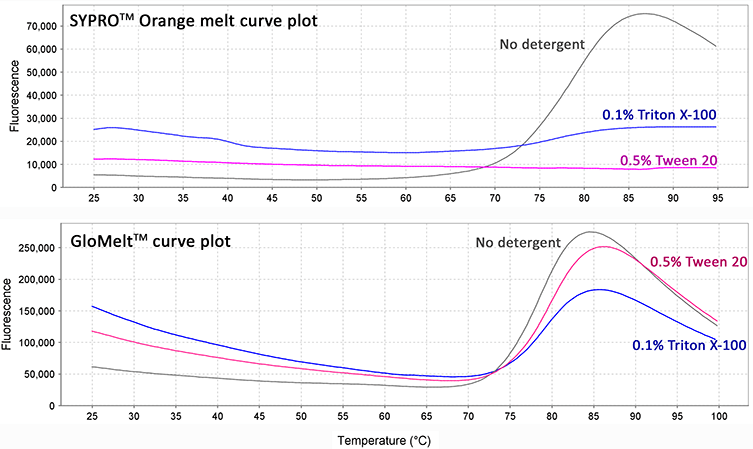
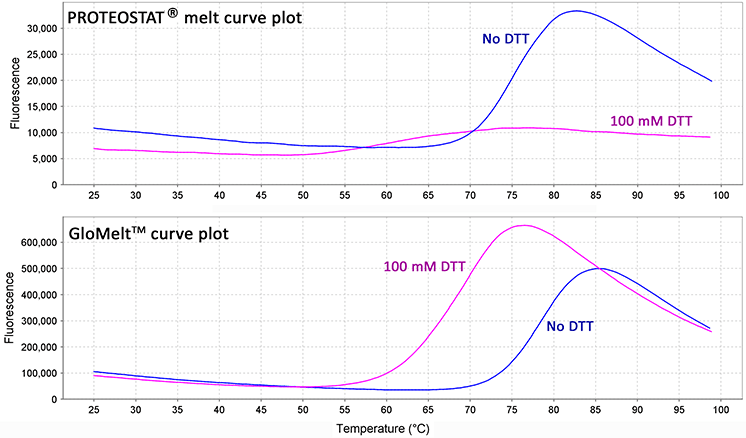
GloMelt™ dye has significant advantages over other environmentally sensitive dyes, such as SYPRO® Orange and PROTEOSTAT® TS dye. GloMelt™ dye generates a strong signal because it is optimized for detection in the SYBR® Green channel of qPCR instruments, and therefore low reaction volumes and low protein concentrations can be used. GloMelt™ dye is compatible with high concentrations of protein stabilizers (such as glycerol and sorbitol), and also protein destabilizers (such as DTT and imidazole). GloMelt™ dye performs very well in high detergent concentrations, unlike SYPRO® Orange. Another advantage is that ROX dye can be included with GloMelt™ dye during thermal shift assays, which improves results by increasing replicate consistency in PCR instruments that require ROX passive reference dye.
Even though AccuOrange™ buffer does contain SDS, which is required for the dye to bind proteins, the assay is very sensitive to small changes in SDS concentration, and also cannot tolerate non-ionic detergents that form mixed micelles with SDS, like Triton®. Therefore we don't recommend using the kit for cell lysates or other samples with significant amounts of detergents.
Gels stained with One-Step Blue® can be dried just like gels stained with Coomassie. The stain will not interfere with the detection of radiolabeled proteins.
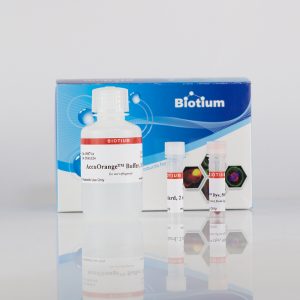
The AccuOrange™ assay is a fluorescent dye-based assay. The dye binds to proteins primarily through hydrophobic interactions. Proteins denature upon heating; the dye binds to the exposed hydrophobic pockets of the protein after cooling. The free AccuOrange™ dye is fluorogenic due to non-radioactive decay but becomes highly fluorescent due to the rigid conformation inside the pocket.
The AccuOrange™ assay more sensitive than traditional protein quantitation assays such as BCA, Bradford and Lowry, and shows superior linearity and reproducibility than the NanoOrange® protein quantitation assay (Thermo Fisher Sci.), but has low tolerance for detergents like SDS and Triton® X-100.