New Products
 Earth-Friendly Products
 Biotium Choice Antibodies
 Special Offers
 Quick Order Tool


 Powered by Bioz


Content #1
Content #1
Content #1
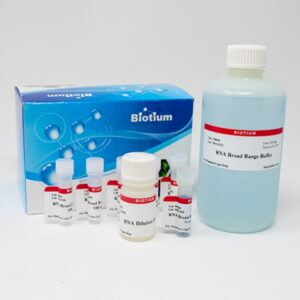
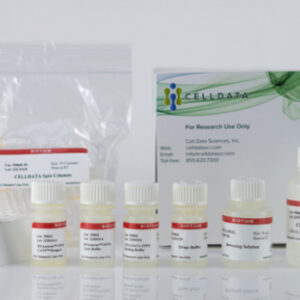
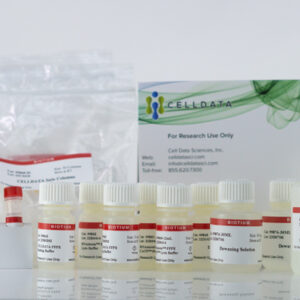
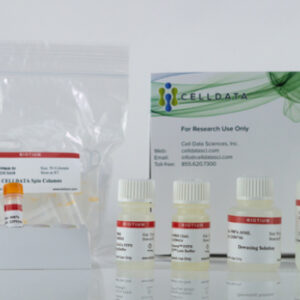
The CELLDATA RNAstorm™ Fresh Cell and Tissue RNA Isolation Kit provides a convenient and efficient method of isolating RNA from fresh or frozen cells or tissue samples.

Purify high quality total RNA from either cultured cells or tissue (fresh or fresh/frozen) in as little as 20 minutes. High yields (up to 120 μg) can be obtained using a simple and quick column-based protocol. Contaminating DNA is removed using a DNase treatment step, and the protocol avoids toxic chemicals such as phenol or chloroform.
Also see the CELLDATA DNAstorm™ FFPE DNA Extraction Kit and CELLDATA RNAstorm™ FFPE RNA Extraction Kit for extraction of high-quality DNA and RNA from FFPE tissue samples.
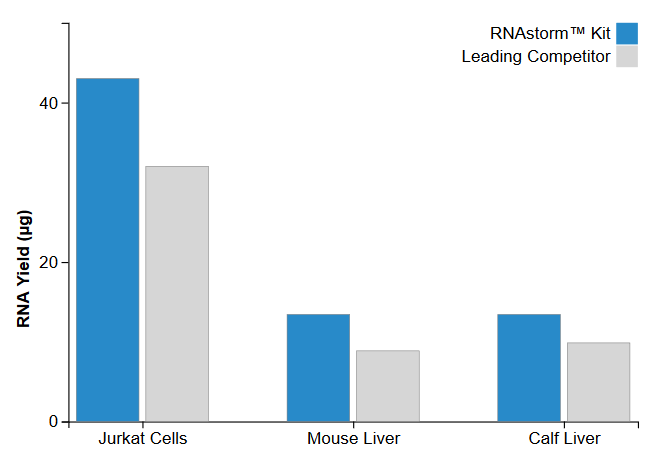
Total RNA was extracted from 107 Jurkat cells, mouse liver tissue (~8 mg) and calf liver tissue (~17 mg) using the RNAstorm™ RNA Isolation Kit and a leading competitor kit. Concentrations were measured using Qubit. For all samples, higher yields were obtained using the RNAstorm™ kit.

Electropherograms of total RNA from 106 Jurkat cells, extracted using the RNAstorm™ RNA Isolation Kit and a leading competitor kit. Post extraction samples were analyzed for quality using the Agilent Bioanalyzer RNA 6000 Nano assay. The RNAstorm™ kit delivered high quality total RNA with a RNA Integrity Number (RIN) of 10.
The CELLDATA RNAstorm™ 2.0 FFPE RNA Extraction Kit (Cat. No. CD506) and CELLDATA DNAstorm™ 2.0 FFPE DNA Extraction Kit (Cat. No. CD507) contain a Dewaxing Solution that was reformulated for IP considerations. These kits are direct replacements for the discontinued CELLDATA RNAstorm™ or DNAstorm™ FFPE Extraction Kits (CD501, CD502). The kits continue to utilize Biotium’s proprietary CAT5™ catalytic technology for efficient reversal of formaldehyde crosslinks.
The maximum capacity of the spin columns in the kit is similar to a standard miniprep column, about 20 ug of DNA. However, the expected yield from FFPE extraction is much lower, it is very rare to get more than 1-2 ug of DNA per prep.
Yes, the RNAStorm™ and DNAStorm™ FFPE kits may be used sequentially. The steps below will allow the protocol to be adapted to extract both RNA and DNA from one sample. You can also download this information in an app note.
Begin by extracting the sample according to the RNAstorm™ kit protocol with the following modifications:
Note: the initial incubation period can be adjusted depending on relative DNA and RNA yields. If the RNA yield is high but the DNA yield is low, reduce the incubation time in step 3 (no less than 15 mins). If the DNA yield is good but the RNA yield is low, increase the incubation time in step 3 (no more than 2 hours).